
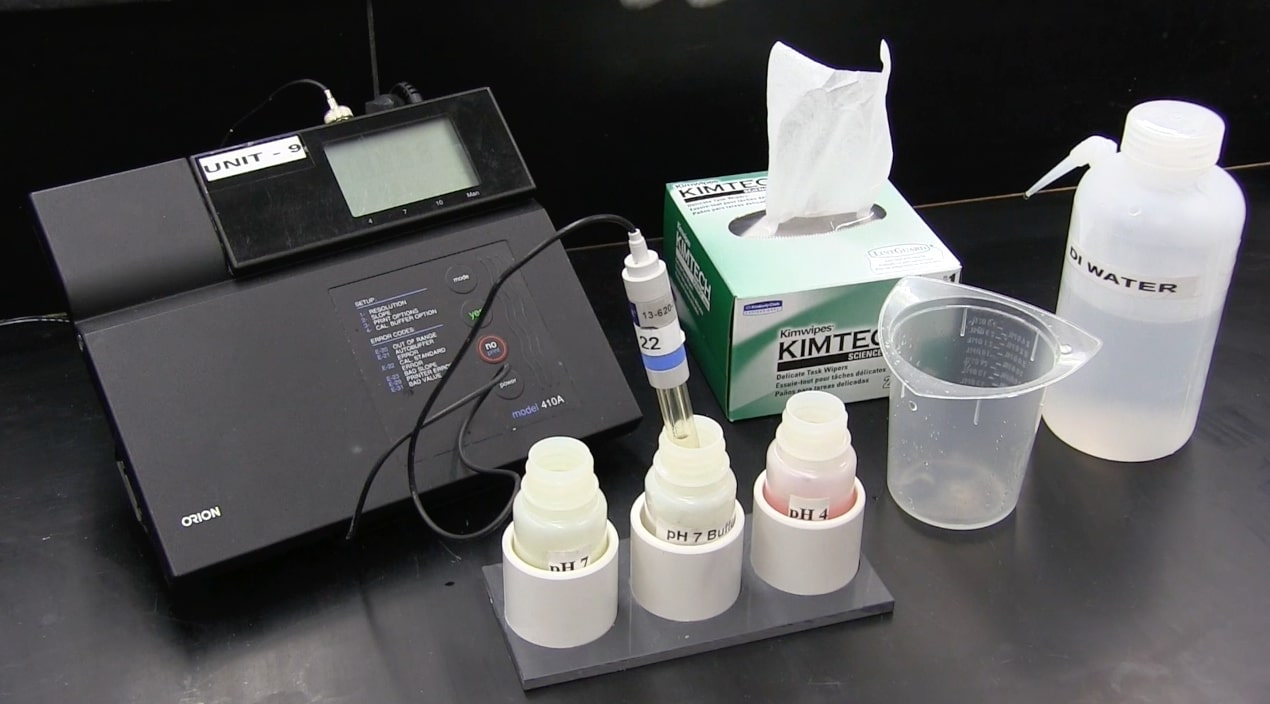
What does measuring pH help us know?
It's easy to take for granted that pH meters exist and are fairly easy to use. If we think in more historical terms, however, it's actually pretty amazing.
How does a pH meter work?
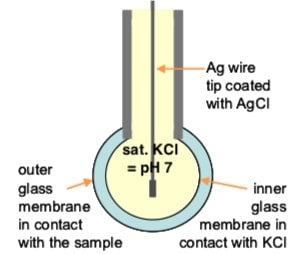
A pH meter consists of three parts: an internal electrode, a reference electrode, and a high-input-impedance meter. A glass probe often contains two electrodes: the internal electrode and the reference electrode. The internal electrode is a Silver wire covered with Silver Chloride (Ag/AgCl wire), and the reference electrode is often made up of the same materials. Inside the probe is a buffer solution at a pH of 7. Measured pH is the difference in [H+] between the reference buffer inside the probe and the sample solution.
The pH measurements are made by comparing the pH of a sample solution with that of a reference solution of known pH, such as a buffer. Therefore, it is important to calibrate the instrument with appropriate buffer solutions before making any measurements. The figure on the right is a simple depiction of a glass electrode used with pH meters (Hach Parameters 2026).
What does a pH meter measure?
An electronic pH meter is used to obtain more accurate pH measurements. A pH meter is an instrument used to measure hydrogen ion activity in solutions - in other words, this instrument measures the acidity/alkalinity of a solution. The degree of hydrogen ion activity is ultimately expressed as pH level, which generally ranges from 1 to 14.
This pH measurement is directly related to the ratio of hydrogen ion concentration and hydroxyl ion concentration ([H+] and [OH-], respectively). The general breakdown of pH levels is listed below:
- Neutral solution: pH = 7
- Acidic solution: pH < 7
- Basic solution: pH > 7
A neutral solution will have a pH of 7 because the activities of hydrogen and hydroxide ions are equal. Acidic solutions exhibit pH readings below 7 (higher hydrogen ion activity compared to hydroxide ion activity), and basic (or alkaline) solutions exhibit pH levels above 7 (hydroxide ion activity is greater than that of hydrogen ions).
Applications
pH meters are widely used in the following industries:
- Food & beverage
- Pharmaceutical
- Oil & gas
- Agriculture
- Water treatment plant
While this is not an exhaustive list of industries that use pH meters, it is clear that pH meters are an essential component of science and have a significant impact on our lives. For example, they can be used to measure acidity levels in wastewater, which is a vital component of the wastewater treatment process. They are used to analyze the exact pH values of food-grade and chemical products to ensure safety and quality, or to evaluate the acidity/alkalinity of drugs in the pharmaceutical and biotechnology industries.
References
Hach Parameters. https://www.hach.com/parameters/ph , accessed 2026.